
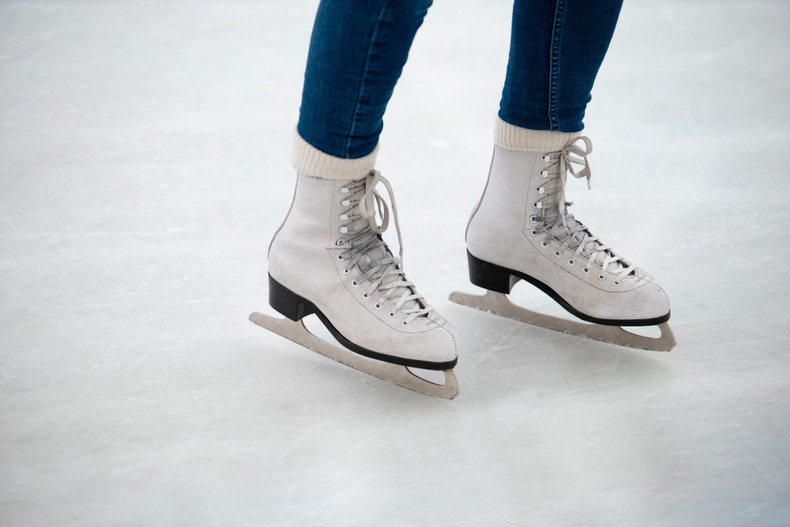
You've checked out several figure skating gear lists and ended up with a bunch of items, but you're not sure where to begin. Some lists include up to fifteen pieces of equipment, whereas others stop at skates and a pair of gloves. It's hard to know what to buy before your first lesson and what to pick up after your first few months.
In this guide, you’ll find a clear breakdown of the gear beginners actually need, what each item does, and the order to get everything in. Whether you're starting lessons yourself or getting a child ready for the ice, you’ll come away with a clear, prioritized list without anything unnecessary.
Figure Skates: The One Piece of Gear You Can’t Skip
Rental skates work fine for your first public session. But once you start taking lessons, they'll hold you back. Because rental boots (the part of the skate that braces the ankle) are soft from years of use, your ankles will roll slightly on every edge. As a result, it is a lot harder to learn how to stay balanced. Most coaches recommend buying your own pair of skates once you sign up for lessons, not because rentals are unsafe, but because a consistent fit affects how quickly you will improve.
Figure skates vs. recreational skates: what's the difference?
Figure skates and hockey skates look similar, but they work completely differently on the ice. Figure skates have a longer, flatter blade designed for precise edge control during turns, spins, and footwork. At the very front of the blade, you'll find the toe pick, a set of serrated teeth used to launch jumps and execute certain stops. On the other hand, hockey skates have a shorter, more curved blade built for speed and quick direction changes. If you want to do figure skating, you need figure skates; hockey skates are not an option.
In terms of figure skates, there are beginner, intermediate, and advanced options. The difference comes down to boot stiffness (how much the boot resists ankle flex) and blade quality. Entry-level boots like the Jackson Ultima Freestyle or Riedell 110 provide enough ankle support to learn the basics without the break-in time that competition-level boots demand. Edea makes boots popular with more serious learners who want a lighter, stiffer option.
Remember, you don't need to spend a lot to get started. A well-fitted entry-level pair of figure skates beats an ill-fitting expensive one every time.
How to know if your ice skates fit properly
A skate fits you well if your heel stays locked in with no lift when you bend your knees, your toes lightly touch the front without curling, and your ankle feels supported, not pinched. To determine your skate size, we recommend measuring your feet at the end of the day when they're slightly swollen. Skate sizing runs about half a size smaller than your street shoe size, but this varies by brand.
One common mistake beginners make is wearing thick socks. Thicker socks keep your feet warmer, but they also reduce the sensitivity between your foot and the blade. Thin, moisture-wicking socks that reach above the boot cuff give you a better feel and fewer blisters. Because of this, some experienced skaters prefer to skate wearing just tights.
If you can, visit a specialty skate shop for a fitting session rather than ordering blind. A fitter can check ankle alignment and flag width issues that online sizing charts don't catch. If in-person fitting isn't an option, look for brands that offer width options or heat-moldable boots.
Renting vs. buying figure skates
Rentals are fine when you're trying skating for the first time or attending occasional public sessions. They don't make sense once you're taking private lessons. When your boot changes every session, your technique adapts to the boot rather than to your actual balance point. At that stage, your own pair, even a basic entry-level set, will contribute more to your progress than additional ice time in rentals.
Guards, Soakers, and Blade Care
Figure skating blades are precision tools that require proper care. A single walk across a parking lot without guards can nick an edge badly enough to require sharpening. An overnight stay in a damp bag without soakers can cause rust before your next session. Neither mistake seems huge at first, but both can quietly cost you money and make skating harder over time.
What skate guards do and what they don't protect against
Skate guards are hard plastic covers that slip onto your blades to protect them when you're walking around off the ice. They protect edges from hard surfaces, such as rubber mats, concrete, and locker room floors. It is recommended to put them on as soon as you step off the ice and take them off when you're seated.
There are two main types of skate guards. Centipede guards (also called latch guards) have individual rubber teeth that grip the blade along its length. They're easier to put on and popular with beginners. Spring guards use a single tension bar and tend to hold the blade more securely, which is better if you're walking longer distances between the locker room and the ice.
One thing skate guards don't do is protect blades from rust. Guards retain moisture against the metal, which is why leaving your skate guards on overnight can cause your edges to corrode.
What figure skate soakers do and why they matter
Soakers are soft, absorbent blade covers, typically made from terry cloth or microfiber, designed for storage, not walking. After you take off your skates and dry your blades with a cloth, put soakers on them before putting them in your bag. They wick away any remaining moisture during transport and storage, preventing rust from forming.
A quick post-skate routine to help protect your skates over the long term:
-
Dry both blades completely with a soft microfiber cloth, including the area around the blade holder where water pools
-
Slip soakers over the blades
-
Store skates in a bag with ventilation (not a sealed plastic bag)
-
When you get home, take the soakers off and let both the blades and soakers dry out fully at room temperature
Most skaters tend to skip the last step and keep the soakers on their skates until the next time they hit the ice. Keeping soakers on for an extended period traps residual moisture against the blade, defeating their purpose of protecting the blade. If you are looking for a pair of soakers, The Mad Spinner carries a variety of soakers that preserve figure skating blades.
Figure skate blade sharpening basics: what beginners need to know
Figure skating blades have two edges: the inside edge (toward the arch of your foot) and the outside edge (toward the pinky side). Sharp edges allow you to grip the ice, while dull edges slide when you try to turn or push. Most skaters need their skates sharpened after every 20 to 30 hours of ice time, though this varies based on ice hardness and how you skate.
You'll know it's time to get your blades sharpened when turns feel like you're slipping, crossovers lose their push, or stopping takes noticeably more effort. When you do sharpen them, take your skates to a shop that specializes in figure skating, not a general sports store. A figure skating sharpener knows the hollow (the curved groove ground into the bottom of the blade) that works for your weight and style. A hockey sharpener usually doesn't.
What to Wear to the Rink
Ice rinks are cold by design; they are typically somewhere between 55 and 65 degrees Fahrenheit at ice level and colder near the surface. Once you start skating, you will warm up fast, which means that while your outfit may feel fine during warm-up, it can feel suffocating twenty minutes into a session. Dressing in layers is the key to solving this problem.
Layering system
Three-layer outfits work best for figure skating practice. A moisture-wicking base layer (a snug synthetic or merino top and leggings) pulls sweat away from your skin so you don't get clammy when your body temperature rises. On top of that, a light fleece or insulated mid-layer traps warmth without restricting hip rotation or arm extension. Add a wind-resistant shell or zip-up jacket as the final layer, and remove it once you start moving.
When it comes to bottoms, jeans aren't the best choice. When jeans get wet from falls or cold weather, they stiffen and cling to your skin. The same issue happens with cotton pants. Instead, look for clothes that dry quickly and stretch easily, so you can move freely while you skate.
If you're taking lessons, your coach needs to be able to see your body position. Avoid wearing baggy pants or bulky snow jackets during your lessons. Form-fitting practice wear is standard for a reason.
Figure skating tights and socks
Figure skating tights are a unique category. They're not your typical tights. Built to withstand falls and keep you warm at rink temperatures, they typically have reinforced footbeds. Many skaters wear tights instead of socks, with the tights' feet sitting directly against the inside of the boot.
If you prefer figure skating socks instead of tights, follow the guidance from the fit section: they should be thin, moisture-wicking, and extend above the boot cuff. Socks that bunch or fold create pressure points that cause blisters. Thick socks are warmer, but they actually reduce the sensory feedback you need between your foot and the blade.
Gloves
Gloves keep your hands warm and protect them during falls. Thin gloves that grip are better than thick gloves that restrict your fingers. You'll sometimes need to grab your boot during a stretch or spin position, and gloves that are too thick will get in the way. Look for gloves with a light, padded palm if you want extra fall protection without bulk.
Choosing the right figure skating clothing not only keeps you warm enough to stay focused but also ensures you’re flexible enough to move freely and comfortably.
Protective Gear for Beginner Figure Skaters: What’s Worth It and What Can Wait
During their first few sessions, beginners are learning to stop, glide, and not fall on their faces. After four or five months, they start working on crossovers, spins, and basic jumps. Your protective gear needs will change as you move from learning the basics to more advanced skating.
What to bring to your first sessions
A helmet is non-negotiable for children. For adults, it is strongly recommended to wear a helmet during the first month while you are still working on your balance. Falling backward onto the ice can happen unexpectedly, and a skating-rated or multi-sport helmet can absorb the impact that a bare head wouldn't. Look for a helmet that sits level on your head, covers your forehead, and has straps that form a V under each ear with no wobble. Wrist guards are a good way to protect against hyperextension during forward falls. They're affordable and discreet under gloves.
Protective gear to use once you start jumps and spins
Once you start learning jumps and spins, it becomes worthwhile to buy hip pads and crash pads (sometimes called butt pads). These are padded shorts or inserts that cushion the hips during sideways and backward falls, which happen often when you're learning a new jump. Knee pads help prevent injury from landing awkwardly during jumps. This figure skating protective gear isn't required during the glide-and-crossover stage, but skaters who wear it while learning jumps tend to fall more easily, which actually speeds up the learning process.
Bunga Pads
Bunga Pads are a category of gel ankle pads that slip inside the boot to cushion the ankle bones against boot pressure. If your new boots are causing irritation at the ankle (which is common during the break-in period), Bunga Pads reduce friction without altering the fit of your skate. Bunga Pads are among the most requested accessories for skaters who have started wearing their own boots. If you're interested in giving them a try, check out our selection of Bunga Pads.
As you start working on jumps, the right protective gear can help you feel more confident on the ice. A helmet is a great place to start, and adding padding as you practice gives you extra protection so you can focus on improving without holding back.
Choosing the Right Skate Bag and What to Pack
A figure skating bag differs from a regular gym bag because it must store blades. Tossing skates into a regular duffel bag without proper protection can damage the edges, snag the lining, and leave you fishing for guards at the bottom when you're already late to the ice. A dedicated bag with a structured skate compartment keeps everything organized and the blades contained.
The Zuca bag is one of the most recognized bag options in the figure skating community. It's a rolling bag with a hard aluminum frame, separate compartments for skates and clothing, and a frame you can sit on rinkside. It's not cheap, but it fully solves the transportation issue. There are less expensive options that work well. We recommended looking for a bag with good ventilation, a dedicated blade compartment, and a wet/dry separation pocket.
Beyond the bag itself, there are a few essential items you should keep in it at all times:
Microfiber drying cloth: You must dry your blades before storing your skates. Rust forms quickly on wet steel, and microfiber pulls moisture off the blade faster than regular terry cloth without scratching the metal.
Spare laces: Skate laces wear faster than you'd expect. They can break mid-session without warning. Carrying an extra pair takes up minimal space in your bag but can prevent loss of practice time if your laces break.
Water bottle: Because the rink is cold, dehydration can sneak up on you. Regardless of how graceful figure skating looks from the stands, it is an aerobic exercise that demands proper hydration.
Gloves: Always keep a pair in your bag, so you never accidentally leave them at home.
Soakers and guards: Both of these belong in your skate bag, not in a separate drawer at home.
To stay organized, consider creating a packing system and sticking to it. Skaters who pack and unpack in the same order tend to arrive at the rink prepared, without worrying about missing anything.
Off-Ice Training Tools to Build Strength and Balance
Most new skaters focus on gear like skates, guards, tights, and a bag. They often stop there. Usually, they don't think about the training tool that coaches keep on the rinkside bench, and beginners typically don't discover it until their second or third month of lessons.
What Is an Off-Ice Figure Skating Spinner and Why Do Skaters Use One?
An off-ice spinner is a flat, rotating platform you stand on in your skate boots (or street shoes) to practice spin position, balance, and rotation at home. It spins on a bearing system that mimics the smooth rotation of ice. To practice with an off-ice spinner, you don't need a rink; you just need enough floor space to stand with your arms extended.
Figure skating spins require a specific body position: arms pulled in, weight centered over the ball of the foot, and chin up. Getting that position right on the ice takes repetition, and rink time is expensive. A spinner allows you to get those repetitions in between ice sessions and build muscle memory. Skaters who train with an off-ice spinner tend to center their spins faster once they get on the ice because their body is already familiar with the position before they hit the rink.
When Should You Buy an Off-Ice Figure Skating Spinner?
An off-ice spinner is a helpful tool once you've taken a few lessons and your coach has introduced a basic spin. Before that, your technique isn't developed enough to support off-ice practice that reinforces proper habits.
When you are ready to buy a spinner, pay attention to the foot platform size. A larger platform, like The Mad Spinner's Ultimate Plus at 12 inches, gives your full foot a surface to work with. That's a good starting point for most beginners, when stability is more important than speed. The Mini 2.0 at 9 inches works well once you have developed some technique and are seeking a more portable option to keep training while on the road. At only 5 inches, the Micro is compact and focuses on the ball-of-foot position used during jumps. All three models rotate in both directions and work on multiple surfaces, from living room carpets to rink warm-up areas.
A Smarter Way to Approach Figure Skating Gear
Figure skating gear follows a simple progression: some items are must-haves right from the start, others become essential as your training progresses, and a few are just optional for most skaters. Keeping this structure in mind can help you save money, avoid confusion, and stay focused on enjoying your skating journey.
Getting fitted with skates, guards, soakers, and a drying cloth before your first lesson sets the foundation. Protective gear becomes useful once you're past basic edges and into jumps. Off-ice training tools are useful for making progress between rink sessions instead of waiting for the next one. If that's your focus, our off-ice training spinner line is created for this specific stage. Explore The Mad Spinner's figure skating spinners to maximize your practice time.