
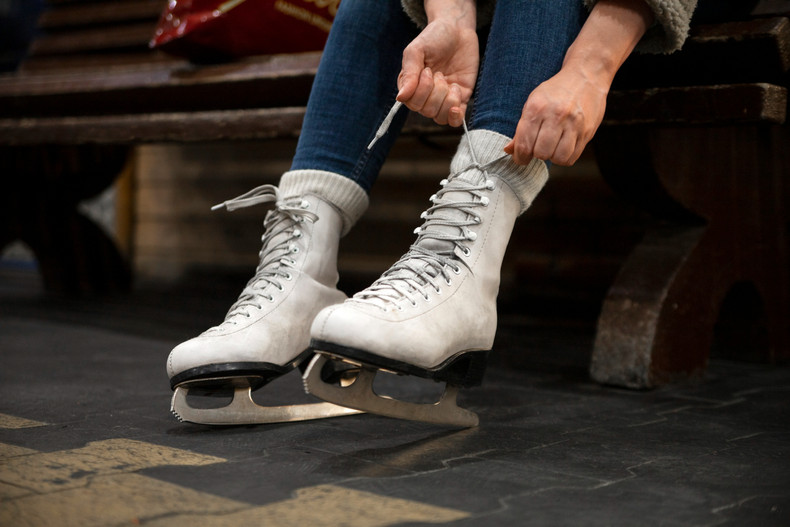
You bring your figure skates to the rink shop, and the person sharpening them asks what hollow you want. Most beginners don’t know, so they go with the default. The problem is that the default is often set for hockey skates, not figure skates, and it can throw off how your edges feel.
Figure skates use different hollows and require a different approach to sharpening. Small details like how the blade is shaped, how the toe pick is handled, and how deep the hollow is all affect how your edges grip the ice. When those details are off, it doesn’t just feel wrong; it can take multiple sessions to recover.
To avoid this, it helps to understand what hollow means, how it affects your skating, and what to ask for when you bring your skates in to get sharpened.
What Sharpening Actually Does to Your Blades
If you run your finger along the bottom of a figure skate blade, you'll feel a narrow groove running the full length. This groove, known as the hollow, is formed by sharpening. On either side of that groove, there are two thin edges. The inside edge, on the arch side of your foot, and the outside edge, on the pinky-toe side. Those two edges are what grip the ice when you push, turn, and jump.
When you get your skates sharpened, a technician passes your blade over a spinning grinding wheel that cuts the groove to a specific depth. The depth is called the hollow radius, measured in fractions of an inch. A smaller number means a deeper groove and sharper edges. A larger number means a shallower groove and less aggressive edges. Most hollows range from 3/8" to 3/4", with 7/16" and 1/2" being the most common in figure skating.
What Is a Skate Hollow and How Does It Affect Your Edges?
The hollow isn't just cosmetic. It determines how much your edges bite into the ice and how much they glide over it. A deeper hollow, like 3/8", gives you more grip and more responsive stopping, but the edges are fragile and create more drag. With a shallower hollow, like 5/8", you get more glide and can reach higher top speeds, but tight turns demand more effort to hold the edge.
A good hollow lets your edges hold in turns, keeps your stops clean, and doesn’t make you work harder than necessary to move across the ice. There’s no one-size-fits-all number. A 90-pound junior and a 160-pound adult will usually need different hollow depths, even if they train the same hours.
Inside edges vs outside edges and why they matter
Even sharpening is just as important as hollow depth. If the inside edge is higher than the outside edge, or vice versa, one edge will catch the ice aggressively while the other slides off. Spins, jump takeoffs, and edge work all depend on both edges being level. Proper sharpening creates two edges at the same height, as verified by a skate technician's edge gauge before your skates are returned.
A less-than-perfect sharpening, even if it has the right hollow, can still cause skating issues. Remember, smooth edges and a clean finish are just as important as the number you request.
Choosing the Right Hollow for Figure Skates
Most figure skaters use 7/16" hollow as a starting point. It's shallower than the 3/8" sometimes used in high-level athletic hockey and deeper than the 5/8" common for recreational hockey players. For figure skating, 7/16" sits in a range that handles edge work, jump landings, and spin centering without demanding so much grip that you tire out while working on longer programs.
Standard hollows for figure skating vs. hockey
Hockey players typically sharpen at 1/2" to 5/8", while figure skaters typically start at 7/16" and sometimes go to 3/8" for skaters who want more bite on jumps. Ice dancers and synchronized skaters often prefer a slightly shallower hollow, since their discipline prioritizes smooth flow over aggressive edge bite. U.S. Figure Skating doesn't mandate a specific hollow; instead, your hollow is a personal preference that you and your coach or skate technician decide on over time.
How your weight and skill level affect your hollow
Lighter skaters can handle a deeper hollow without the edges catching unpredictably, because they're not pressing as hard into the ice. Heavier skaters generally need a shallower hollow to avoid too much drag and resistance. Beginners often do well starting at 1/2" because the shallower cut is more forgiving. As you progress and your edge work gets more precise, moving to 7/16" gives you the grip to feel and control the difference between your edges on each foot.
The chart below maps hollow sizes on a grip-to-glide scale.
|
Hollow |
Grip |
Glide |
Best suited for |
|
3/8" |
High |
Low |
Advanced skaters, lightweight, aggressive edge work |
|
7/16" |
Medium-high |
Medium |
Most figure skaters (standard starting point) |
|
1/2" |
Medium |
Medium |
Beginners, adult recreational skaters |
|
5/8" |
Low-medium |
High |
Recreational, ice dance focus, heavier skaters |
Flat Bottom V sharpening and whether it makes sense for figure skaters
Flat Bottom V (FBV) is an alternative sharpening style in which the blade's bottom has a flat channel rather than a rounded hollow, with sharper, angled edges on either side. Some skaters find it gives them better glide while keeping edge grip. It's less common in figure skating than hockey, and not all sharpening shops offer it. If your shop does, it's worth a test session once you already know how your standard hollow feels. It's harder to evaluate FBV if you've never had a well-done traditional sharpening as a reference point.
Figure Skate Sharpening vs. Hockey Sharpening
Taking your figure skates to a shop that normally does hockey skates isn't always a problem, but it requires the right technician. Figure and hockey blades share the same hollow mechanics, but there are two meaningful differences that affect how they should be handled.
The toe pick
Figure skate blades have serrated teeth at the front called the toe pick. It's what you use for jump takeoffs, certain spins, and footwork elements. Toe picks should not be sharpened during a standard sharpening pass. A technician who runs the grinding wheel too far toward the front of the blade can round out the toe pick, which kills the grip you need for takeoffs and toe steps. A good sharpener works through the middle section of the blade and stops well before the toe pick.
If your jump takeoffs suddenly seem to slip, ask the technician how they manage the toe pick before your next session. It's a reasonable question, and any skilled figure skate sharpener should have a straightforward answer.
Why blade thickness matters in figure skates
Figure skate blades aren't all the same thickness. Entry-level blades tend to be thinner than the steel on mid-level or advanced blades from brands like MK or Wilson. A thinner blade can't support as deep a hollow as a thicker one without the edges becoming fragile and prone to chipping. A technician who doesn't measure or know your blade's thickness before selecting a hollow depth is just guessing.
This is less of a concern with hockey skates, which have a narrower range of blade thicknesses. It's a real variable for figure skaters moving up through blade levels, and it's one of the reasons a sharpener who specifically works with figure skates tends to get better results than one who mainly does hockey.
How Often Should You Sharpen Your Figure Skates?
Typically, skaters can go between 20 and 40 hours of ice time between sharpenings. That's a wide window, and where you fall within it depends on a few simple factors that you can keep track of once you understand them.
How often to sharpen based on your ice time
Start with a simple log: record your ice hours and note when you last sharpened your skates. If you skate four hours a week, that means you need to be sharpened every five to ten weeks. If you skate 12 hours a week for competition training, you're likely to need your skates sharpened every 2 to 3 weeks. How often to sharpen figure skates is less about the calendar and more about the actual time on ice, because blades wear from friction, not from sitting in your bag.
New figure skates don't come pre-sharpened from the manufacturer. Blades are shipped dull as a safety measure during transit. Before you step onto the ice for the first time in new skates, they need to be sharpened. Getting that first sharpening done at a shop you trust also gives you a baseline so you'll know how the blades should feel when they're at the right hollow, which makes it easier to notice when they're getting dull.
Factors that speed up blade wear
A few things will push you toward the shorter end of the 20-40 hour range. Skating on public session ice accelerates wear because it tends to be rougher and less well-maintained than dedicated freestyle ice. Walking off the ice onto concrete without blade guards can even once can damage the edges. A heavier, aggressive style with hard-edged work and aggressive stops wears blades faster than a lighter, flow-focused style. Skating outdoors on natural ice dulls blades quickly because the ice is harder and often contains debris.
Cold ice, usually between 17 and 23 degrees Fahrenheit, as in most hockey rinks, is harder than the softer ice at around 25 to 26 degrees, which is typical for figure skating rinks. Colder, harder ice dulls edges faster, so if your rink runs cold, plan accordingly.
How to Tell if Your Figure Skates Need Sharpening
There are two easy ways to tell if your blades are ready to be sharpened: the first is a feeling you get while you're skating, and the other is a quick check you can do before stepping onto the ice.
The fingernail test
Holding the skate blade steady, run the pad of your thumb or fingertip gently across the edge, not down the length of the blade, but at a 90-degree angle. Sharp edges catch the ridges of your fingerprint and feel slightly grippy. Dull edges allow your finger to slide straight over without any resistance. Work slowly from behind the toe pick to the heel, checking both the inside and outside edges. Nicks feel like small notches under your finger. Any section where the edge passes without catching should be looked at before your next session.
What your skating tells you about your edges
Dull blades announce themselves in specific ways on the ice. Crossovers that used to feel smooth start washing out at the end of the push. Edges on circles feel like they're slipping rather than holding the arc. Two-foot stops require noticeably more pressure to slow down. On jumps, takeoffs feel uncertain or flat because the rocker area of the blade, the midsection you push off from, isn't gripping the way it should.
A freshly sharpened blade that hasn't settled can be mistaken for a dull one. New sharpenings can feel stiff or overly grippy for the first 15 to 30 minutes that you're on ice. That's normal. If your skates still feel wrong after a full session, the sharpening itself may be the issue, not the wear.
Finding a Qualified Figure Skate Sharpener
Not every skate shop that handles skate sharpening does a good job with figure skates. Where you go for sharpening ice skates matters more for figure skaters than for most hockey players, because the margin for error is smaller.
A bad hockey sharpening usually leaves you with dull edges or an uneven grip. A poor figure skate sharpening can damage the skate blade, rounding out the toe pick or altering the rocker on your ice skate blades. That kind of damage can take multiple sharpenings to fix, if it can be corrected at all.
What to ask before they touch your blades
Three questions will tell you most of what you need to know before handing over your ice skates.
-
Do you regularly sharpen figure skates?
A shop that works with figure skaters consistently understands how to handle toe picks and maintain proper blade edges. Experience with figure skates isn’t guaranteed, even for those who frequently sharpen hockey skates. -
What hollow do you recommend for a figure skater at my level?
A knowledgeable technician will explain whether you need a shallow hollow or a deep hollow, based on your weight, skating style, and experience level. Someone defaulting to “1/2 radius” without asking questions is likely using a hockey setting rather than adjusting the blade hollow for figure skating. -
Do you keep records of each customer’s preferred hollow?
A good sharpener tracks your radius, preferences, and previous sharpening results. Consistency is what gives you reliable edges sharp enough for control without excess drag.
Red flags to watch for
A technician who doesn’t ask about your hollow, a shop using a generic grinding wheel without adjustment, or anyone sharpening past the toe pick are all red flags.
Uneven pressure on the blade can also create uneven edges or uneven wear, affecting balance on both the inside and outside edges. The time you spend finding the right skate shop pays off in consistent performance on the ice all season.
Ice Skate Blade Maintenance Between Sharpenings
Good maintenance between sharpening ice skates sessions helps preserve your edges, reduce excess friction, and keep your glide consistent.
Soakers vs. guards
Blade guards protect your skate blade when you’re walking off the ice, whether that’s from rubber mats, locker rooms, or concrete. Even brief contact with rough surfaces can cause rough spots or dull your blade edges. Soakers are used after skating to absorb moisture and prevent rust. They help maintain fresh edges between sessions.
Use guards for walking. Use soakers for storage. Mixing them up leads to moisture damage and shorter edge life.
When a honing stone helps
A honing stone helps maintain your edges between full skate sharpening sessions. It won’t reshape the blade's hollow or change the radius, but it can smooth minor burrs left by rough ice.
If your blades feel slightly rough, gently run your hand along the edge and run the stone lightly to reduce imperfections. This helps maintain more glide and reduces more drag during skating. But once you start to lose glide, struggle with a tight turn, or notice dull blades, it’s time for a proper sharpening.
Keep training off the ice while your blades are getting sharpened
Good blade maintenance comes down to two things: knowing what to ask for and building the habit of tracking your ice time. Once you've found a sharpener who works regularly with figure skates, confirmed your hollow, and started keeping a rough log of your sessions, the guesswork disappears. Your blades will feel consistent from week to week, and you'll catch signs of wear before they affect your performance.
That consistency matters because ice time is limited for most skaters. The more predictable your edges feel, the easier it is to focus on improving your skills rather than adjusting to your equipment at every session. But progress doesn’t only happen on the ice.
Working on spin centering, balance, and jump positions between sessions helps you get more out of every minute you spend on the ice. The Mad Spinner's off-ice training spinners are a great way to keep developing your skills at home, on the road, or before stepping onto the ice for warm-up. Pairing that with a clear understanding of effective off-ice training can accelerate your progress from session to session.
While your blades are being sharpened, protect them properly. Use figure skate soakers for storage and hard guards whenever you're walking off the ice, because sharp edges are worth protecting.