
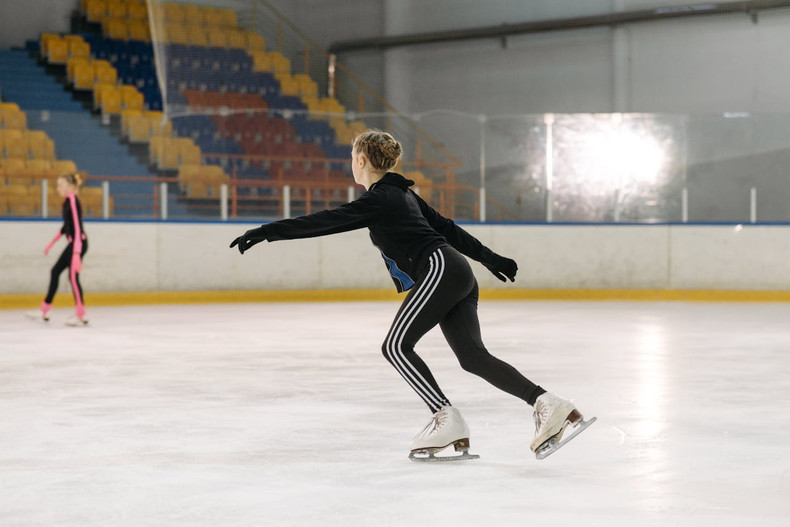
Your figure skating practice outfit shapes how much you get out of every session. A coach watching your hip alignment from the boards needs to see your body, not a parka. When you stop drilling and stand at the boards for feedback, a soaked cotton sweatshirt goes cold in about two minutes on rink air. Regular athletic wear gets you onto the ice; it does not necessarily serve you once you are there.
Indoor rinks run between 55 and 65 degrees Fahrenheit cold enough to need a layer during warm-up, warm enough that you will be peeling it off 15 minutes into edge work. Figure skating clothes for practice need to handle that range without restricting your movement or hiding your lines from the person correcting them.
Below is a section-by-section breakdown: bottoms, tops, outerwear, accessories, plus what not to bring. There is a dedicated section for male and boys skaters, since most guides ignore that entirely.
The bottoms that actually work at the rink
Why leggings beat joggers for figure skating practice
Joggers look fine off the ice but create specific problems once you are on it. The ankle material bunches near the boot hooks during crossovers, the waistband slides down during hip extensions, and the looser leg fabric obscures your knee tracking, something coaches check constantly when you are learning jumps. Figure skating leggings sit closer to the body and stay there.
Fabric is the bigger decision. Cotton absorbs sweat and stays wet, which means it goes heavy and cold the moment you step off the ice to rest. Polyester-spandex blends with at least 8 to 10 percent spandex pull moisture away and recover their shape after hundreds of repetitions. If your rink runs cold, many early-morning sessions feel noticeably colder than afternoon public sessions; fleece-lined leggings add real warmth without the bulk of an extra layer.
A high waist is worth the extra cost if you are drilling regularly. Low-rise waistbands creep down during spin exits and landing positions, and adjusting them mid-practice breaks your focus at the worst moments.
Over-the-boot vs. ankle-length which to choose
Over-the-boot leggings have a stirrup or full foot panel that sits under the blade boot. They close the gap between pants and boot, keep the hem away from laces and hooks, and create the clean hip-to-blade line you see on skaters who have been training for a few years. Many skaters switch to them and do not return to ankle-length, though it comes down to personal preference and how your boots fit.
Ankle-length leggings work fine, especially early on when you are still figuring out boot fit and lacing. The only requirement is that the hem sits above the ankle without bunching near the laces. Excess fabric by the blade is a nuisance rather than a hazard, but it is easy to fix.
If standard athletic leggings fit you well, start there. Ice skating clothes for adults come in a wider size range than skating-specific brands typically offer, and spending on over-the-boot cuts makes more sense once you are training several times a week. Brands like ChloeNoel or Mondor make skating-specific options when you want that dedicated construction.
Our leggings are built for movement at the rink, high waist, four-way stretch, and a fit that stays put through a full session.
Tops and base layers for practice sessions
What a fitted top does for your technique
When a coach is watching you skate, they are reading your shoulders, your hip crease, and the line from your free hip through your torso. A loose or baggy top folds at the hip during a spiral, bunches at the shoulder in a layback, and can hide the alignment faults that are causing the element to break down in the first place. Fitted fabric gives your coach clear information.
Figure skating tops worn in practice tend to be long-sleeved for two overlapping reasons: they protect your arms from ice scrapes when you fall, and they keep your forearms warm during the slower portions of a session when your core is working hard but your extremities are not. Short sleeves work fine in warmer rinks or if you run hot during intense drilling they layer well under a zip-up during warm-up and come off when you start working harder.
In most rinks you will see a moisture-wicking long sleeve as the standard base layer, with something zippable on top. That combination covers early-morning sessions and the warmer afternoon slots without requiring a wardrobe change between ice times.
Layering your top half as the session heats up
Your top half handles more temperature variation than your legs do across a single session. The first 15 minutes look nothing like a jump run-through. You are standing, listening, doing slow stroking and by the time you are repeating double axels or working a program segment, you have generated enough heat that the hoodie you wore onto the ice is now working against you.
Start with a fitted base and add a zip-up or light hoodie over it. Take the outer layer off once you are warm. Most skaters drape it over the boards rather than stuffing it in a bag so they can grab it back during notes. The figure skating practice outfit that holds up across a full session uses two layers on top, not one heavy one.
Browse our sports tops if you want a fitted base that moves with you at the rink.
Warm-up jackets and outerwear for the rink
What to look for in a practice jacket
A bulky parka belongs in the lobby bag. On the ice, it cuts your arm swing short, adds rotational mass that throws off spin entries, and prevents the coach from reading your shoulder and torso position. What you want is something fitted enough to show your lines, with enough stretch to lift your arms overhead without the jacket riding up.
Brushed polyester or microfleece traps air for warmth without adding weight. Raglan sleeves or articulated elbows stay flat when you raise your arms rather than pulling across the back. A full zip beats a pullover you want to get it off cleanly between drills without disrupting your gloves or headband.
A figure skating hoodie covers most practice situations. It works as a warm-up layer on the ice, comes off when you are drilling, and doubles as an off-ice training layer. Fitted cut, not oversized for the same reason as the top underneath it.
When to take the jacket off (and why the timing matters)
Many skaters keep the jacket on through the first 10 to 15 minutes of warm-up, then take it off when they move into technical work. Once you are drilling jumps or running spin sequences, your core temperature climbs fast, and staying in the jacket causes you to overheat and sweat through your base layer well before the session is over.
Put it back on during breaks. Muscles cool down faster than most people expect when you stop moving on cold ice standing at the boards for two or three minutes of coach feedback can leave your legs feeling tight before you push off again. Keeping the jacket on the boards rather than in the bag means it takes about three seconds to put back on.
Our hoodies are fitted, stretchy, and built to work both at the rink and off the ice.
Accessories that earn their place in your bag
Gloves the item most beginners skip
Falling is part of figure skating practice, and hands hit the ice first. Thin figure skating gloves protect your palms and fingers from scrapes and cold without getting in the way of hand position during elements, something thick ski mittens cannot do, because they are too bulky to hold a correct skating hand shape.
Any thin moisture-wicking glove from a sporting goods or outdoor store works. You want something light enough that you can still feel your grip but warm enough to take the edge off rink air during the slower parts of practice. TMS does not carry gloves, but the bar for what works here is low priority fit over brand.
The sock mistake that causes boot problems
Ice skating socks get overlooked until your feet hurt, and the wrong choice causes problems that have nothing to do with your boots. Thick cotton socks compress under pressure inside the boot, create hot spots that blister, and reduce the tactile feedback you need to develop edge sensitivity. Thin performance socks 2 to 4 millimeters let the boot hold your foot the way it was fitted to.
Look for moisture-wicking material, low seam construction at the toe, and a cut that reaches mid-calf so it stays tucked inside the boot. Any performance sock marketed for skiing or cycling works. Skating-specific brands exist but are not necessary.
For protective padding, check out our figure skating accessories and Bunga pads ankle and toe protection that fits inside the boot.
What male and boys figure skaters wear to practice
The same clothing principles apply to male skaters fitted, layered, moisture-wicking, coach-visible but almost no guide covers this directly, and the product landscape does not help. Most men's skating apparel is built for competition, which means finding good practice-specific options takes a bit more searching than it does for women and girls.
For boys in lessons, fitted athletic pants or skating trousers with a long-sleeved base layer work well. The pants need enough stretch for a full knee bend and hip rotation; stiff denim and anything with a heavy hem near the ankle are worth avoiding. A zip-up hoodie over the base layer handles the warm-up phase.
For adult male skaters, fitted athletic pants with a tapered ankle, a moisture-wicking long sleeve or half-zip pullover, and a hoodie or zip-up jacket covers most rink conditions. The figure skating practice outfit formula does not change by gender; a coach reading shoulder rotation and hip alignment needs to see the torso clearly regardless.
The over-the-boot legging is less common in men's figure skating apparel, but tapered athletic pants with a clean ankle work as the practical equivalent. If the hem bunches near your boot laces, it is worth fixing for the same reason as for any skater.
What to skip clothing that works against you at the rink
Each of these shows up regularly on first-time and returning skaters, and each creates a specific problem on the ice.
-
Bulky winter coats. They cut arm swing short, add rotational mass that disrupts spin entries, and prevent your coach from seeing your shoulder and torso alignment. Use a fitted zip on the ice; leave the parka at the boards.
-
Cotton sweatshirts and sweatpants. Cotton absorbs sweat and does not release it. After 20 minutes of drilling, a cotton sweatshirt is cold, heavy, and damp and you have a full session left. The most common mistake beginners make with figure skating clothes.
-
Overly baggy clothing. Loose fabric can catch on boot hooks, shift during landings, and hide the body lines your coach needs to see. Coaching feedback is only as good as the information available: a covered hip crease tells your coach nothing.
-
Jeans. Essentially no flexibility through the knee joint. Even stretch jeans restrict the range of motion required for basic crossovers and edge work.
-
Trailing scarves. A safety hazard during spins and a falling risk if it catches underfoot. A fitted neck gaiter does the same warmth job without the loose end.
-
Thick cotton socks. What not to wear ice skating includes any sock that compresses inside the boot and dulls your feel for the blade. This one is easy to fix and makes a noticeable difference.
How your practice outfit works off the ice too
The same fitted, flexible, moisture-wicking figure skating gear that works on the ice transfers directly to off-ice training which matters when you are building a practice wardrobe on a budget and want pieces that earn their keep across multiple settings.
Off-ice work like dryland conditioning, jump drills, and spinner practice demands the same range of motion as on-ice sessions, and a coach or training partner watching your spin position off-ice is reading the same things: body line, rotation axis, hip and shoulder alignment. Baggy or restrictive clothing limits the feedback loop the same way it does at the rink.
The TMS off-ice spinners are built for flat-surface spin training at home, in a garage, or in the rink lobby between sessions. You wear the same leggings and fitted top you brought to the ice, no separate off-ice wardrobe needed.
For more on building off-ice work into your training schedule, read our guide: The importance of off-ice training for figure skaters.
Conclusion:
You now have the full picture: what to wear, what to skip, and why each choice matters at the rink. The outfit that works is not complicated: fitted layers you can adjust, fabrics that manage moisture, a cut that keeps your lines visible to the person coaching you.
The first purchase most skaters should make is a good pair of leggings. Everything else can wait while you get time on the ice. When you are ready to round out the wardrobe, a fitted sports top and a zip hoodie cover almost every rink condition from warm-up to cool-down.
Shop our leggings built for skating movement, or browse the full clothing range to build your practice wardrobe from there.