
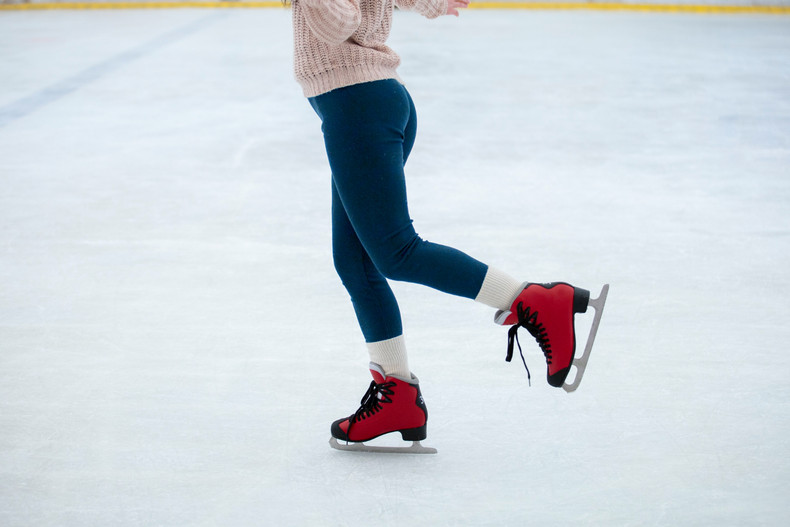
A figure skating spinner trains body position, axis control, and rotation feel off the ice. Platform height and surface contact area, not brand or price, determine how well that practice transfers on ice.
Between designs, the differences that shape training go beyond size and color. Platform height, the contact surface under your foot, and the material each change what you're training, and the gap between design choices matters more than price.
Blade-shaped underneath, a rocker-style spinner rides on a narrow contact point and requires more ankle strength to stay centered. A low-profile, flat aluminum disc keeps your foot close to the floor with a wider platform underfoot. Those two styles train differently. When rotation speeds up and you pull your arms in, disc design determines whether you stay centered or lose your axis.
Off-ice spin training: what a spinner actually builds
A figure skating spinner is a disc or platform for training on smooth, hard floors. Stand on it and spin. You're practicing the body control and rotation your spins require on ice, without needing ice time to do it. You'll sometimes see the category called a figure skate spinner or, in dance training, a spin board. For skating use, the design replicates the stance and balance demands of a boot on a blade, not pirouette technique on the ball of the foot.
Through this practice you build arm position at full rotation, hip and shoulder alignment, and the ability to find your axis. That stable center is what a spin needs to stay tight. Skaters call this centering spins. Over time, the repetition shapes the same body position habits that carry over when you're on the blade.
The Mad Spinner produces three aluminum spinner sizes. All use a flat-disc construction, which separates their training profile from rocker-style or elevated alternatives.
Why low-profile design changes your off-ice results
How platform height and surface area affect ankle alignment
Stand on a flat disc and your ankle sits at roughly the same angle it holds when balanced on a blade. Your foot stays close to the floor and your weight distributes across a wider contact surface. Keeping the profile low means the ankle doesn't have to compensate for extra height while the balance habit is forming.
A rocker-shaped underside, creates a narrower contact surface. That changes things. With that narrower base, more existing stability is needed before the positioning you're trying to learn is actually there. For advanced skaters who already have strong single-foot axis control, it's an effective training surface. Skaters still building that control often find the rocker position doesn't replicate what a blade actually demands.
At half an inch off the floor, the TMS Ultimate Plus 12-inch aluminum off-ice spinner keeps the ankle working through the same range that off-ice figure skating training needs to replicate.
Two-foot training, progression, and what happens at faster rotations
A flat-platform spinner supports two-foot practice before single-foot work, which is where body position development starts for most skaters. Stand with both feet on the disc, arms extended, then pull them in: that drill trains the centering and axis alignment that figure skating spins depend on, without adding single-foot balance demands before you're ready. Rocker-style designs don't accommodate two-foot use because the curved contact surface requires one-foot positioning from the start.
Speed creates a second consideration. Pull your arms in during rotation on a narrow-contact off ice spinner and the ankle absorbs the acceleration with less floor contact under it. Skaters who've tried rocker-style spinners at faster speeds report losing their axis as arms come in. With a smaller contact surface, the disc resists that acceleration less, which means it trains the wrong response at the moment it matters most. When rotation is fastest, a wider platform spinner stays in better contact with the floor. Coaches rated by the PSA (Professional Skaters Association) who endorse the Mad Spinner line work this design into their students' off-ice spin training.
Rocker, plastic, and platform spinners: what each one trains
Rocker-shaped spinners get the most attention in off-ice spinner discussions online, and for a specific group of skaters, that reputation is earned. Its rocker-shaped underside closely mimics blade geometry, a genuine advantage for advanced skaters with reliable single-foot axis control. For everyone still building that control, the narrow contact surface creates a problem. Less ankle resistance when rotation speeds up means the disc teaches the wrong recovery reflex before the right one is in place.
Wider metal platforms trade portability for stability, with a larger footprint that suits centering drills and static balance work. At the budget end, plastic spin board styles reduce the cost of entry, but the training feedback drops with the material: on plastic, it's harder to feel where your weight is shifting during the rotation. Price doesn't predict training quality here.
The TMS Mini 2.0 8-inch aluminum off-ice spinner and the TMS Micro carry the same flat-disc, close-to-the-floor design to smaller feet and younger skaters who need a disc that fits their stance. All three sizes in the Mad Spinner line are aluminum, which provides more tactile feedback during rotation than nylon or plastic.
Putting a low-profile spinner to work in your practice
Use the spinner on a smooth, hard floor (hardwood, laminate, or hard tile). Soft surfaces can cause the disc to catch.
After the initial two-foot balance work, practice holding specific spin positions: camel, sit spin, and layback posture. Hold each position and track where your weight shifts. These figure skating spinner exercises are how coaches reinforce off-ice pirouette training and body position before ice time locks them in.
Among the PSA-rated coaches who endorse the TMS Micro off-ice spinner are Christian Hendricks, Konstantin Kostin, Beth-Anne Duxbury, and Joan Vienneau-Bunnell. The spinner reinforces good body position; it doesn't replace coaching or ice practice. Check with your coach before starting, particularly for younger skaters.
Questions about figure skating spinners
What is a figure skating spinner, and how is it different from a turn board?
A figure skating spinner is a disc or platform you spin on off the ice, designed to practice the body position and rotation control your spins require on the blade. Turn boards are built for pirouette technique on the ball of the foot, a dance-focused training tool. A spinning disc replicates the narrower stance and balance demands of a skate boot.
Why does spinner height or profile matter for off-ice training?
A low-profile spinner keeps your foot close to the floor, which puts your ankle at roughly the same angle as when balanced on a blade. Higher-profile or rocker-shaped designs change that angle. Off the ice, the ankle position you practice carries directly onto the blade, which is why proximity to blade conditions is what makes off-ice training transfer.
Can beginners use a low-profile spinner, or is it too hard to balance on?
Beginners do better on a flat, wide-platform spinner than a rocker-style design. The wider surface area and low profile give more ankle support and allow you to start on both feet before moving to one-foot balance. Rocker-style and blade-shaped spinners have a smaller contact surface, which makes them harder to control for skaters still building single-foot axis stability.
How is an aluminum spinner different from a plastic pirouette board?
Aluminum gives more tactile feedback during rotation: you feel where your weight is shifting more clearly than on plastic or nylon. On different flooring surfaces, aluminum holds up better too. A plastic pirouette board costs less and is lighter, which makes it an accessible first step, but the training feedback is reduced.
Do I need a coach to use a figure skating spinner safely?
A spinner can be used without a coach. At the start, though, guidance helps. Some spinners carry a safety risk if used incorrectly; check with your coach before beginning, particularly for younger skaters. A coach can establish proper arm position, axis alignment, and the right time to move from two-foot to single-foot practice.
The spinner that fits your training stage
A flat-platform spinner holds stable during two-foot practice and stays in contact with the floor when rotation speeds up. For skaters still building axis control, those two qualities make a flat-platform disc the right choice. A rocker-style disc earns its place once single-foot stability is solid and the work shifts to refining technique.
The TMS Ultimate Plus aluminum off-ice spinner is The Mad Spinner's standard choice for most competitive and developing skaters. For younger skaters or those starting off-ice spin work for the first time, the TMS Mini 2.0 brings the same flat-disc construction at 8 inches.
For more on structuring an off-ice routine, The Mad Spinner's guide to off-ice training for figure skaters covers how to combine spinner work with your ice sessions.